
The conflict of interest is screaming. CNBC waves around layoff headlines and anxious surveys to juice fear, then asks the credential salesman what anxious readers should buy. Shockingly, he says “buy credentials.” Of course he does.
Publisher: CNBC
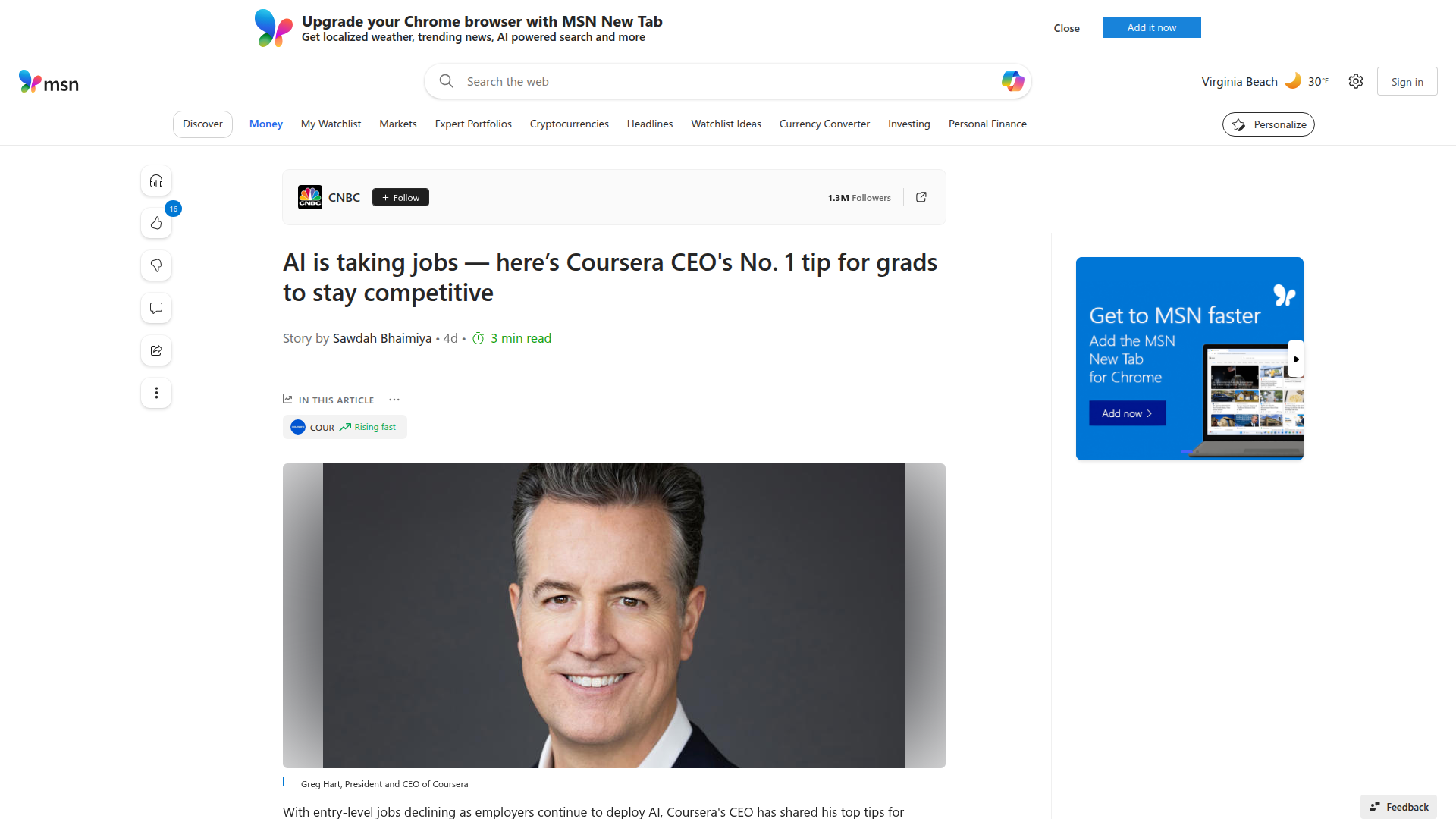
“AI is taking jobs — here’s Coursera CEO’s No. 1 tip.” That headline is a scare horn glued to an ad. It pretends to be about the labor market, then hands the mic to a guy whose entire business is selling the cure he’s pushing. That isn’t reporting. It’s a sales funnel with a byline.
The conflict of interest is screaming. CNBC waves around layoff headlines and anxious surveys to juice fear, then asks the credential salesman what anxious readers should buy. Shockingly, he says “buy credentials.” Of course he does. You don’t quote a butcher for dietary advice and call it balanced.
And the “advice” is vapor. “Show initiative.” “Be ready to learn.” “Take micro-credentials related to your field.” Which ones? Why those? How do you tell quality from fluff? How do you show the skills beyond a PDF? No answers. Because specifics would expose how thin this pitch is compared to building a portfolio, contributing to open source, shipping anything, or doing an apprenticeship where someone can actually judge your work.
Evidence? Nowhere. There’s zero hard data showing micro-credentials beat internships, shipped projects, apprenticeships, or strong references in actually getting people hired or paid more. No controlled outcomes. No employer conversion rates. No hiring managers saying, yes, this specific badge meaningfully changes our decision. In the real world, working code, real deliverables, and people who can vouch for you beat a stack of vendor stickers every day of the week.
The piece also smears unrelated facts into one mushy panic. Corporate headcount cuts, task automation percentages, and graduate gluts are different problems with different causes. Automation usually reassigns tasks before it erases entire professions. Entry-level bottlenecks are mostly supply, demand, and companies offloading training costs, not some one-button AI apocalypse. But nuance doesn’t sell, so they stitched together Amazon, Salesforce, CIPD, and ISE tidbits to imply a single doom narrative that just happens to end at the Coursera checkout page.
Our editor called it a thin, breathless hit-piece, and he’s right. It reads like Sawdah Bhaimiya’s personal panic diary. The publisher is monetizing insecurity instead of explaining the structural shift. That’s intellectually bankrupt and morally opportunistic. Amateur hour. This is vanity-press energy masquerading as journalism, pushing a triggered, feel-good nostrum: buy another badge and you’ll be safe. It’s irrational comfort food for worried grads.
Micro-credentials can be fine as a supplement. They are not the universal “No. 1 tip,” and pretending they are is dishonest, especially when the messenger runs the store. If you want a real signal, build something people can use and let an employer verify it. Keep this grift up and the next advice column will be written by a bot that’s smarter than their editor and at least honest about what it’s selling.